






The Emperor's Tea
At the court of the Ming dynasty (1368–1644), white tea was the most beloved, and legend has it that it could only be served as a tribute to the emperor by young women wearing white gloves—for this reason, white tea is still known today as the Emperor's tea.
The history of white tea is actually older, dating back to the Tang dynasty (618–907 AD): from then on and for the following centuries, it remained a court tea that could only be consumed by royalty and was unknown outside of China.
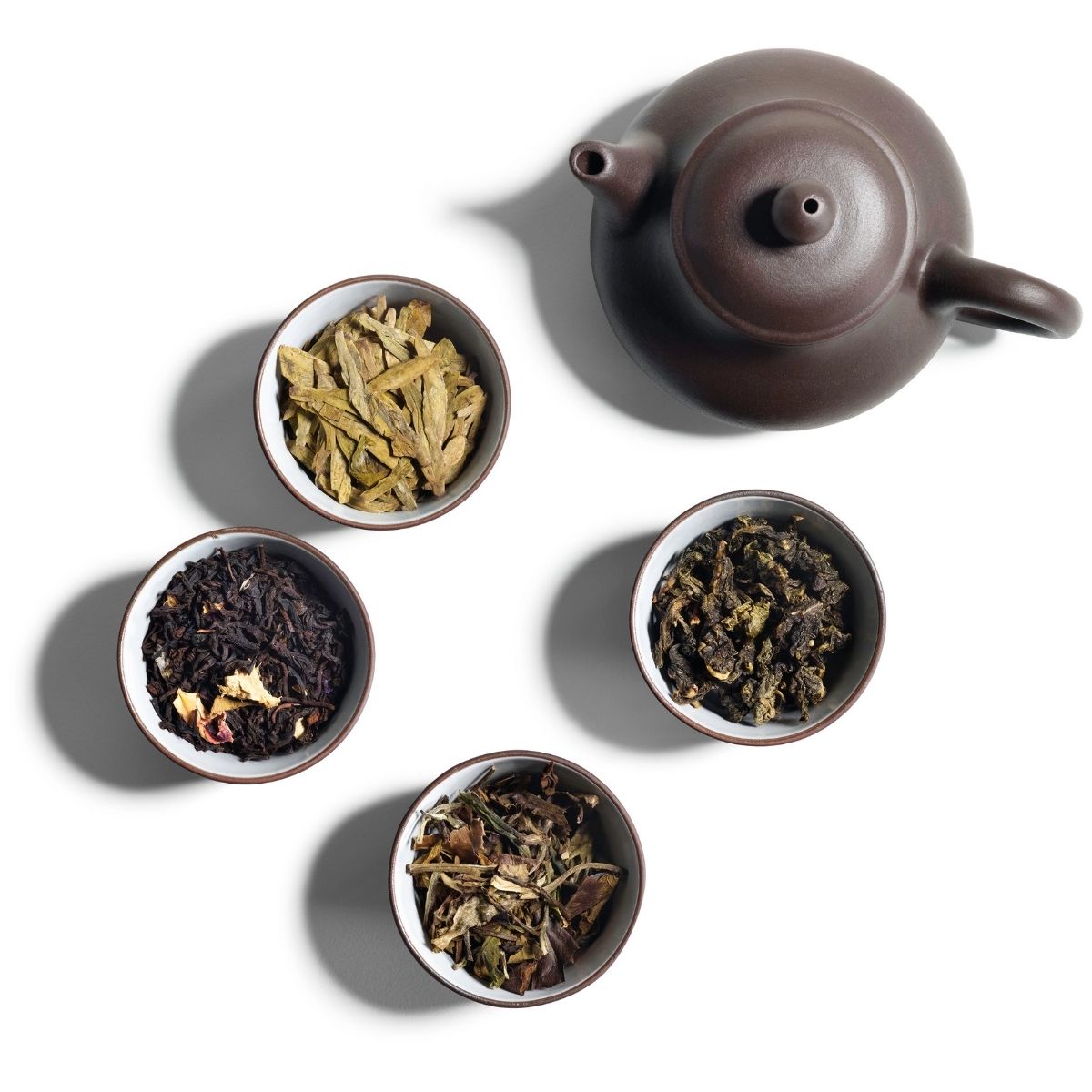
White tea gets its name not from the clear liquid obtained, but from the light, silvery-white down that grows on the still-closed buds. It is the only type of tea derived from the buds and the most tender leaves of the Camellia Sinensis plant. The harvest is done by hand, and during the imperial era, it was entrusted to young maidens who, with their small, delicate hands, were able to pick the buds while keeping them pure and intact. White tea was revered to such an extent that during the Song dynasty (960–1279), it is said that Emperor Hui Zong decided to trade his empire for a cup of white tea.
At that time, the ceremonial preparation resembled that of Japanese matcha, with the tea ground into a powder and whisked in wide ceramic bowls. The transition to what we drink in a cup today arrived during the Ming dynasty, when the court decided that only loose-leaf white tea could be offered as tribute.
Why is white tea so prized? Because the buds of the plant from which it is obtained contain the most valuable nutrients: antioxidant catechins and vitamins in a concentrated and bioavailable form, to allow the plant to grow and live for a long time.
To preserve this treasure of antioxidant substances, white tea is processed very little—less than any other type of tea—it undergoes no fermentation or oxidation, only a delicate drying in natural air.
White tea is still cultivated in small quantities today, mainly in the Chinese province of Fujian, and is still harvested manually; for this reason, global production is much lower compared to other types, and it continues to be one of the most precious teas in the world.
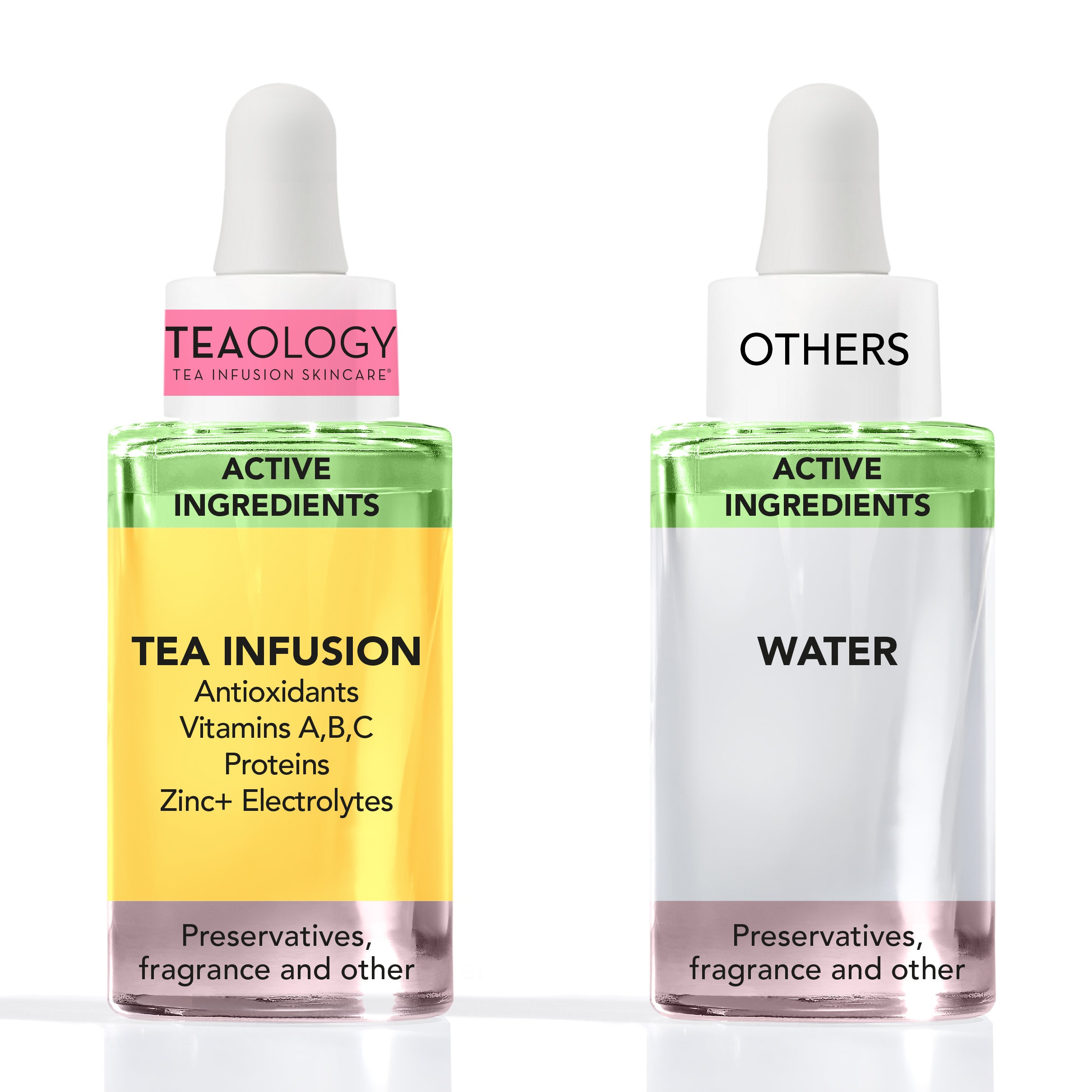
Teaology uses in its products a white tea infusion obtained from the buds of the organic White Peony cultivar, produced in Fujian.
White tea nutritional table
The nutritional analysis performed on 100 ml of white tea by the laboratories of the Humanitas Clinical Institute highlights the organoleptic and nutritional composition of this tea (read the full Humanitas report).
White tea infusion contains:
- Proteins: 0.22 g
- Iron: 0.02 mg
- Magnesium: 1 mg
- Potassium: 8 mg
- Sodium: 1 mg
- Zinc: 0.01 mg
- Vitamin C: 0.3 mg
- Vitamin B1 (Thiamine): 0.007 mg
- Vitamin B2 (Riboflavin): 0.06 mg
- Vitamin B3 (Niacin): 0.03 mg
- Vitamin B6: 0.005 mg
This table confirms that white tea is a natural source of many active ingredients used in cosmetic formulas, including B vitamins—considered skin's best friends because they help keep it healthy, protect the skin barrier, and regulate sebum production.
What white tea does for the skin
White tea contains in its buds many of the active ingredients used in cosmetics: Vitamin C with its brightening and illuminating power, and B vitamins such as B3, known as niacinamide. Along with the vitamins, white tea's greatest wellness elixir is the epigallocatechins (EGCG) in its buds—powerful antioxidants that, as we discussed in our article on antioxidants and free radicals, counteract the oxidative action also responsible for skin aging.
Providing our body with EGCG both from the inside—by drinking a cup of white tea—and from the outside, by applying treatments based on white tea infusion, helps defend the skin from inflammation, dryness, and wrinkles, and protects the hydrolipidic barrier.
Clinical and dermatological research highlights the following benefits of epigallocatechins for the skin:
1. Photoprotection and countering photoaging
Clinical studies show that topical application of EGCG, by blocking free radicals before they damage collagen and elastin, significantly reduces UV-induced erythema, inflammation, and cellular DNA damage. Read the research.
2. Collagen preservation and anti-wrinkle action
Clinical trials and in vitro studies show that tea rich in epigallocatechins inhibits enzymes such as collagenase and metalloproteinases, which are responsible for the degradation of skin structure, resulting in a loss of tone and the formation of wrinkles.
3. Deep hydration
Research conducted on keratinocytes (epidermal cells) indicates that EGCG stimulates the expression of genes responsible for the natural moisturizing factor (NMF) and the synthesis of hyaluronic acid. Read the research.
4. Soothing action
A recent systematic review of clinical studies has confirmed the efficacy of EGCG in reducing symptoms of burning, itching, and pain in conditions involving redness and irritation. It also shows promising applications in controlling sebum production in subjects affected by acne. Read the research.
5. Spot lightening (anti-melanogenesis)
EGCG reduces the synthesis and secretion of melanin by acting as an inhibitor of tyrosinase, the key enzyme in the formation of hyperpigmentation and sun spots. Read the research.
A thousand-year-old tradition confirmed by the most recent scientific research proves that white tea is an effective longevity ingredient that we have captured in our most advanced Teaology formulas to keep skin toned, luminous, and youthful for longer.


