



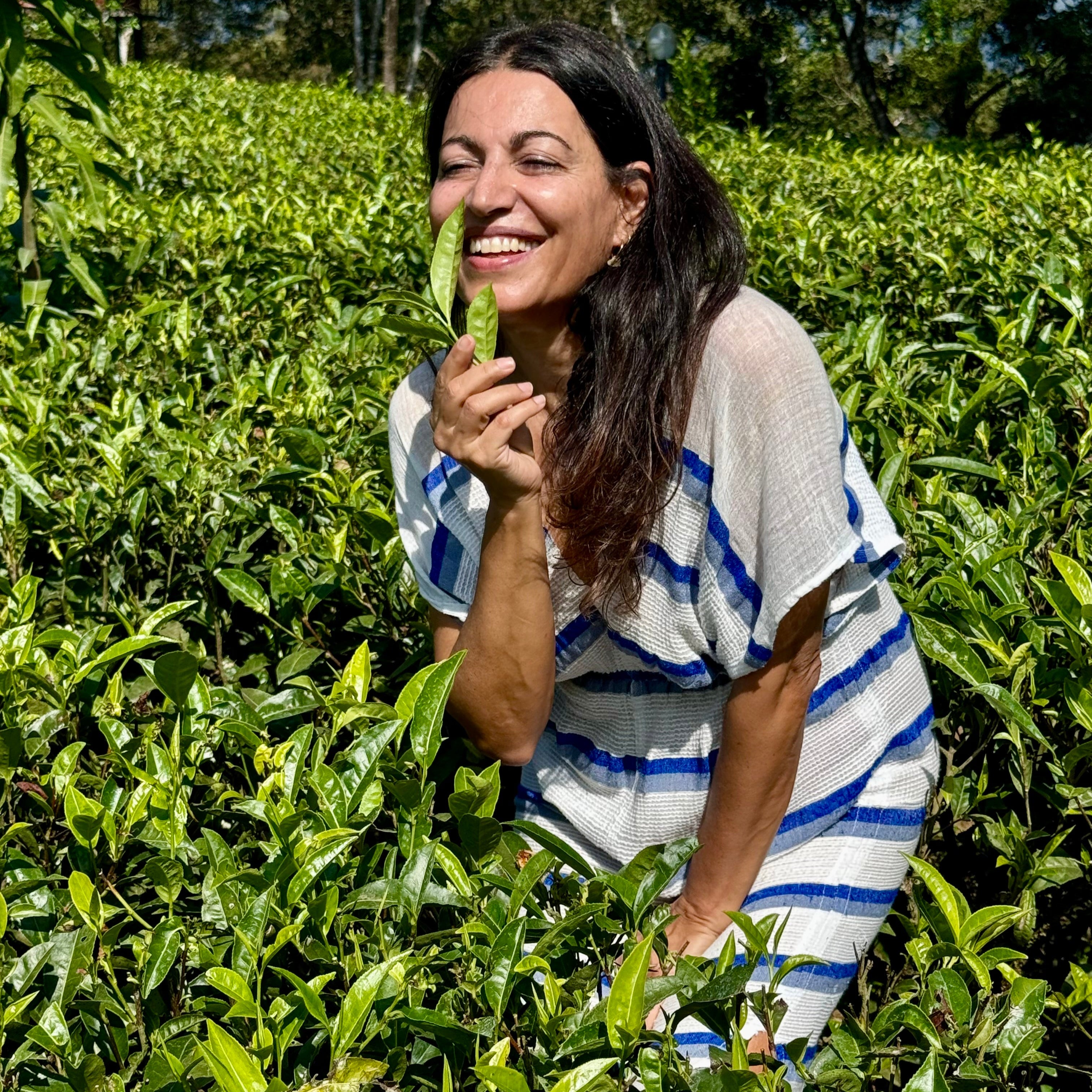

The art of tea becomes the art of fragrance
«When I saw the Teaology line, I immediately thought of a refined fragrance that would evoke feelings of calm and serenity, capable of capturing the ritual and benefits of tea. I love this ingredient and often use it in my perfumes for its natural and elegant character.»
These are the words with which French master perfumer Nathalie Lorson described her inspiration in creating the first Teaology fragrance.
In addition to having created hundreds of iconic perfumes for major maisons and niche brands, Nathalie is a true tea lover who loves tea and is able to use it as a versatile ingredient to bring freshness and personality to her olfactory compositions. After Black Rose Tea, she also created the eau de toilette Passion Tea, a gourmand fragrance with a surprising heart of vanilla and raspberry, and (spoiler) she is working on a new fragrance that we will launch in 2027.
The tea ritual thus becomes the inspiration for creating a fragrance where tea notes uplift the body and mind, transforming this scented accord into a shared moment that brings calm, well-being, and serenity.
Tea in perfumery: the story of an ingredient that revolutionized the world of fragrance
From Bulgari to Elizabeth Arden, via Louis Vuitton and Le Labo: one of the world's oldest beverages has become a leading figure in modern perfumery, giving rise to a new idea of freshness and elegance.
From the millennia-old tea culture to the birth of a new olfactory family
For thousands of years, tea has been much more than just a beverage. Originating in China and later spreading throughout the rest of the world, it has crossed cultures and traditions, becoming a symbol of hospitality, meditation, balance, and well-being.
Its fragrance has always played a fundamental role in this experience: the green notes of Camellia Sinensis leaves (the tea plant), the delicate scents of its white flowers, and the warm, smoky nuances of certain black teas.
In 1692, the Dammann Frères tea house began creating blends with natural flavorings that soon won the favor of Louis XIV's court and remain among the most famous teas in the world today.
Thanks to its extraordinary olfactory richness, tea made its debut as a leading figure in perfumery in 1992 when, in a world dominated by floral, amber, and opulent compositions, there was a growing desire for lighter, more natural, and easier-to-wear fragrances.
Perfumery began to explore new sensory territories, seeking inspiration in water, air, and nature.
Tea arrived when master perfumer Jean-Claude Ellena, a great tea enthusiast, found inspiration while visiting the Parisian maison Mariage Frères, famous for its selection of fine teas. His insight was striking in its simplicity: to capture the sensation of a freshly brewed cup of tea. Eau Parfumée au Thé Vert by Bulgari was born, an olfactory revolution that would become a global bestseller, projecting Bulgari—until then known only for its haute joaillerie creations—into a global brand of high-end fragrances.
The colors of tea in perfumes
In the 2000s, tea conquered artistic perfumery but also became a mass-market phenomenon when, in 1999, Elizabeth Arden launched its Green Tea Scent Spray, an international phenomenon born from the olfactory genius of Francis Kurkdjian, who was destined to become one of the most influential perfumers of his generation.
Green Tea is an explosion of citrus freshness, mint, and green tea, transforming a sophisticated accord into an everyday, almost thirst-quenching fragrance that everyone loves. It is the fragrance of a rejuvenating break, a summer day, a moment of lightness.
With Elizabeth Arden, green tea transcended the boundaries of niche perfumery and luxury to enter the daily lives of millions of consumers, becoming a symbol of fresh and accessible perfumery.
Its success demonstrates that tea is not just a new olfactory note, but a true sensory universe, capable of connecting fragrance, nature, and well-being.
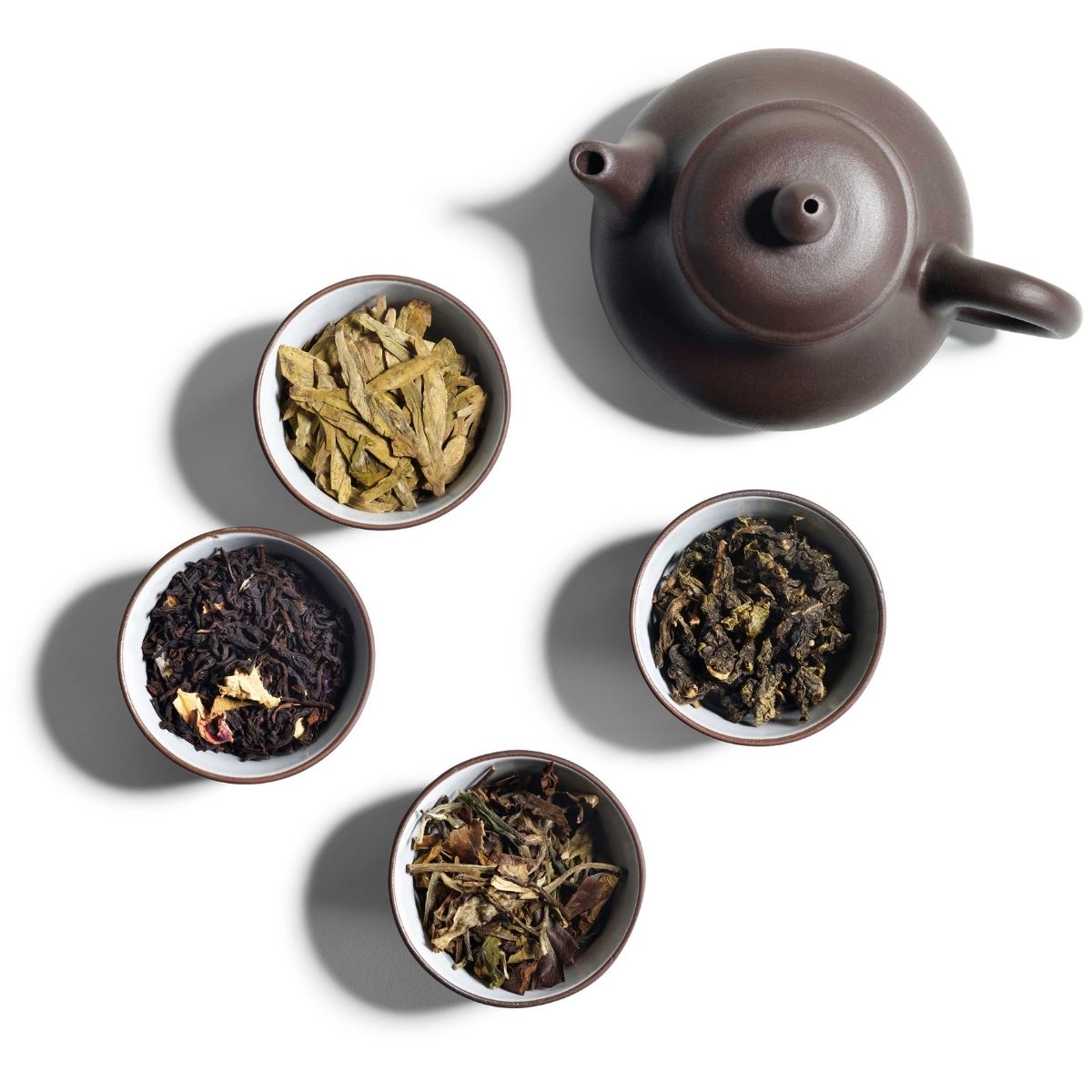
In the following years, research expanded even further with accords inspired by white teas, oolongs, and black teas. Today, tea is one of the most versatile inspirations in contemporary perfumery:
- Green tea evokes freshness, nature, and energy—often paired with citrus notes.
- White tea suggests delicacy and luminosity, accompanied by musks and light flowers.
- Black tea introduces more intense and structured nuances: it can be woody, spicy, or smoky.
- Oolong tea (or blue tea) offers floral, fruity, and roasted suggestions to evoke a particular type of infusion.
- Matcha tea is a more recent discovery, but it has become one of the most beloved notes, especially among young people. The green accords of matcha tea are softened by creamy and bitter notes inspired by matcha latte and milk tea, expressing sensations of authenticity, comfort, and connection with nature.
What makes tea special, in all its varieties, is its ability to fully engage the senses: the color of the leaves, the warmth of the infusion, the taste, the aroma, and the ritual of preparation.
Perhaps that is precisely the secret of its success in perfumery.
Tea is not just a fragrance. It is an experience, a memory, a moment to dedicate to yourself.


