




Shaping Passions
I believe in the power of passion and the energy it can give us to achieve our dreams, both in life and at work. Teaology was born from two of my great passions: tea and beauty.
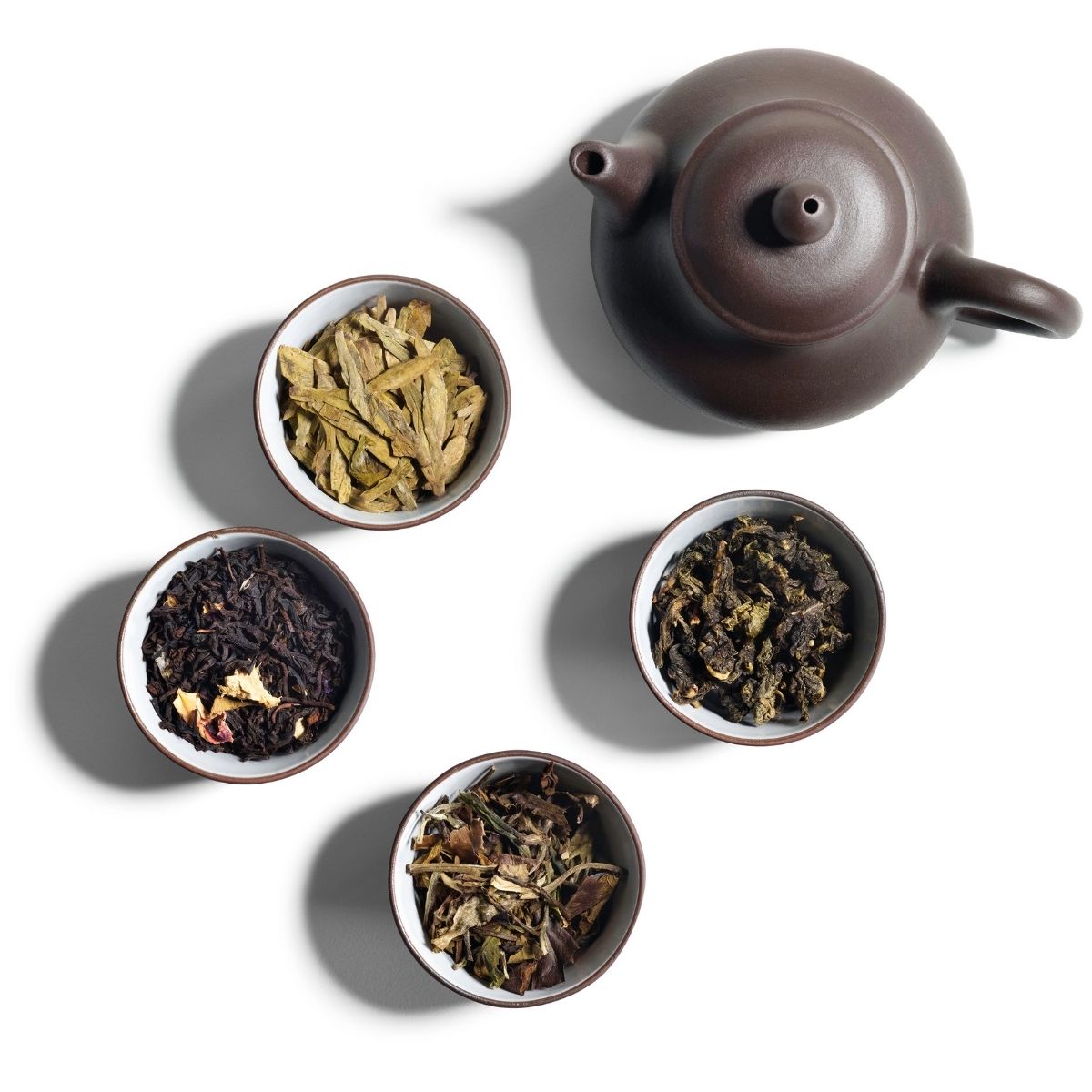
Tea is a passion that came first; I've been drinking tea for as long as I can remember, and I've always loved it, perhaps because it made me feel good or for the ritual of its preparation. For this reason, as soon as I had the opportunity, I started studying it. The turning point came when I began attending the first tasting courses organized by a shop near my home. There, I learned to distinguish a fermented black tea from Japanese green teas and discovered why oolong tea is called blue tea and why white tea is the only one you can drink in the evening... but we will talk about tea types in another article.
My passion for cosmetics came later, after graduation, between one attempt and another to figure out what I would like to do in life, a stroke of luck came (today I know it for sure): an internship as a junior Product Manager in a cosmetics company. It was there, among the research labs, training books, and mixing plants, that my love for this sector took shape, and I have not left it since.
The Antioxidant Power Hidden in Tea Leaves
Working closely with researchers, I discovered that tea was not just my favorite drink but also an ingredient widely used in cosmetics for its high content of catechins, powerful molecules that protect against oxidation, one of the main enemies of cosmetic formulas. In fact, every time we open a jar of cream or a bottle of shampoo, we bring them into contact with oxygen, light, and heat, triggering a chemical reaction (oxidation, precisely) that can alter the original formula, reducing the effectiveness of the active ingredients and causing changes in the product's color, odor, and consistency.
To protect formulas from oxidation and preserve the effectiveness of active ingredients, it is therefore essential to use one or more substances with antioxidant power. Those most frequently found in the ingredient list of cosmetic products are:
tea extract – INCI name camellia sinensis leaf extract
vitamin E – INCI name tocopherol or tocopheryl acetate
vitamin C – INCI name ascorbic acid
Try reading the labels of the cosmetics you have in your bathroom, and you will see that at least one of these is present.
The camellia sinensis leaf extract you find in ingredient lists is therefore the antioxidant extract from the leaves of the tea plant, which is called Camellia Sinensis and belongs to the camellia family. Within each tea leaf is a real treasure of powerful molecules capable of fighting oxidation processes: these molecules are called catechins, with the most concentrated being epigallocatechin EGCG.
5000 Years of History and 35,000 Scientific Studies
There are many legends about the origin of tea, the most accredited one dates its discovery back to 2737 BC when some leaves detached from a tree and fell into Emperor Chen Nung's hot water, captivating him. Tea first originated as a medicinal remedy and later became the second most consumed beverage in the world, after water. Today, the properties of tea have been demonstrated by over 35,000 scientific studies and publications, making Camellia sinensis one of the most studied plants in the history of modern medicine, while also maintaining a central role in both Traditional Chinese Medicine (TCM) and Ayurveda.
Among these studies, there are over 2,500 scientific studies published that specifically analyze the link between tea (Camellia sinensis) and skin health. These researches include in vitro studies (on skin cells), in vivo experiments, and clinical trials on volunteers. Source (global biomedical database, PubMed / MEDLINE click here to learn more)
The scientific literature on tea applied to dermatology and cosmetics is mainly divided into these broad categories:
Photoprotection and prevention of photoaging (900 studies): Tea polyphenols (catechins and particularly EGCG) have demonstrated an extraordinary ability to absorb UV radiation, reduce sunburn caused by UVB rays, and protect cellular DNA from oxidative stress damage.
Anti-aging effect and collagen stimulation (700 studies): Research confirms that both topical application (creams and serums) and oral intake increase cutaneous microcirculation by almost 29%, improving oxygen supply, hydration, elasticity, and inhibiting enzymes that degrade collagen.
Acne and oily skin treatment (400 studies): Thanks to its strong anti-inflammatory and antimicrobial properties, green tea significantly reduces sebum production and counteracts the activity of the bacterium Cutibacterium acnes, offering a natural alternative to traditional treatments.
The other 300 studies address topics related to prevention and how tea can promote DNA repair.
The Benefits of a Cup of Tea on the Skin
Starting from these 2500 scientific studies and supported by over 25 years of experience in the cosmetic sector, I began working with an extraordinary Team of cosmetologists with the goal of using tea in cosmetics in a different way, a way that was more similar to when we drink it, and to do this, we started from a simple question:
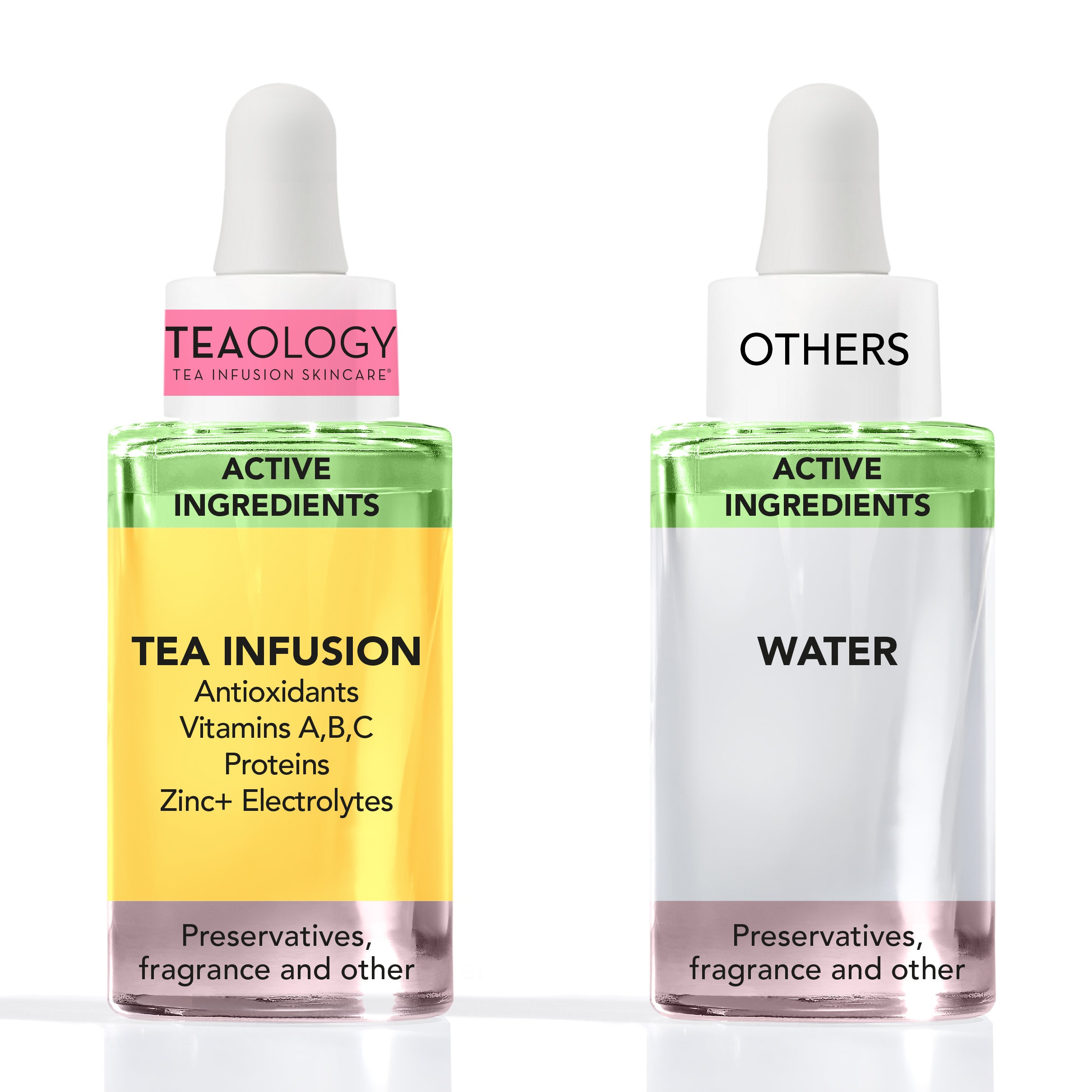
What is normally in a cream? A lot of water, in fact it almost always appears as the first ingredient in INCI.
What can we do to make tea almost as effective as drinking it? Replace the water in the formula with a real tea infusion.
Why? Because tea naturally contains antioxidant catechins, amino acids, minerals, and many essential vitamins: A, B, C, K, E.
Result? Every formula based on tea infusion, not just extract, transforms the water present in the formula from a simple solvent, without any function, into a base naturally rich in active ingredients that makes the formula 100% functional.
My two passions took shape and became a patent, Tea Infusion Skincare®, which we use in every product to transfer the benefits of a good cup of tea to the skin.


